When key performance characteristics are critical to system performance, engineering will want to create a source control drawing in accordance with ASME Y14.24. The source control drawing will list specific supplier(s) that have been qualified to produce the product identified in the drawing. Engineering wants to use a source control drawing because the parts’ characteristics are critical to the design, and they do not want the parts procured from an uncharacterized source of supply.
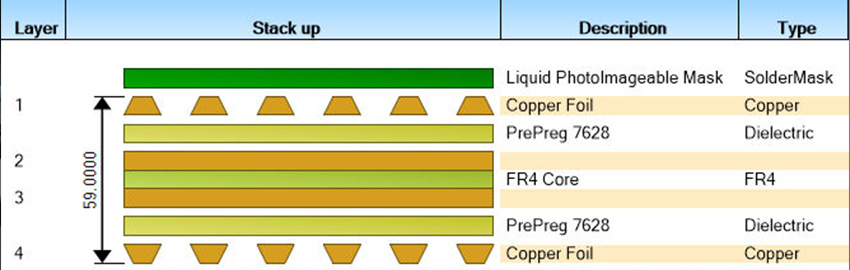
PCB performance strongly depends on the laminate material’s dielectric constant (Dk) and dissipation factor (Df) related to complex dielectric constant, ε = ε’ – jε” through Dk=ε’/ε0 and Df=ε”/ ε’. Complex permittivity can be measured using a number of techniques, including waveguide, cavity resonator, open resonant cavities, split-post dielectric resonator and free-space techniques.
Why DIY machines will ring up big sales for some EMS/ODMs.
Self-service intelligent kiosks have evolved over the years, gaining increased functionality, yet have their origins in traditional food and beverage vending machines. These machines were originally electromechanical in design, but now are largely electronic today, with multiple embedded modules and communications functions integrated into the design.
A new CAD tool imports design files and quantitatively predicts product life.
Previous approaches to reliability assurance included “gut feel,” empirical predictions such as MIL-HDBK-217 and TR-332, industry specifications, “lessons learned” programs, failure mode effects analysis, and test-in reliability schemes. While these approaches can provide some value, it is felt that the most comprehensive analysis can best be done virtually using computer modeling of the circuit board in the intended environment. Such modeling can predict the life and reveal any design weaknesses before any prototype boards are even built.
Self-service intelligent kiosks have evolved over the years, gaining increased functionality, yet have their origins in traditional food and beverage vending machines. These machines were originally electromechanical in design, but now are largely electronic today, with multiple embedded modules and communications functions integrated into the design.
Design projects that are actually completed with time to spare are few. We do what we can, but breaking new ground invariably uncovers a few snakes in the brush, and dealing with them takes time. That means that the next step – production ramp – starts behind schedule. At that point you need to get assembly quotes back ASAP so a choice can be made and the trigger pulled to get product flowing.