The IHDV Series power inductors are designed for automotive, energy and industrial applications requiring isolation voltages up to 1.5kV. Available in automotive-qualified and commercial versions, the devices feature powdered iron alloy cores for soft saturation characteristics and support continuous operation at temperatures up to 180°C. Offered in 0808 and 1008 case sizes, the inductors are engineered for onboard chargers, battery charging circuits, power factor correction and high-voltage DC battery filtering. The automotive versions are AEC-Q200 qualified, while all models are RoHS-compliant, halogen-free and include support pins for enhanced shock and vibration resistance.
Read more: Vishay Introduces IHDV Series 1.5kV Power Inductors
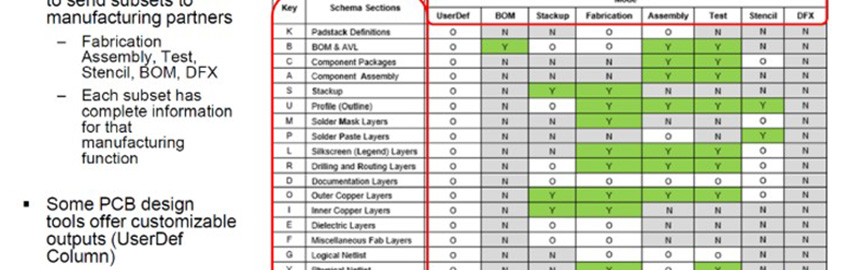
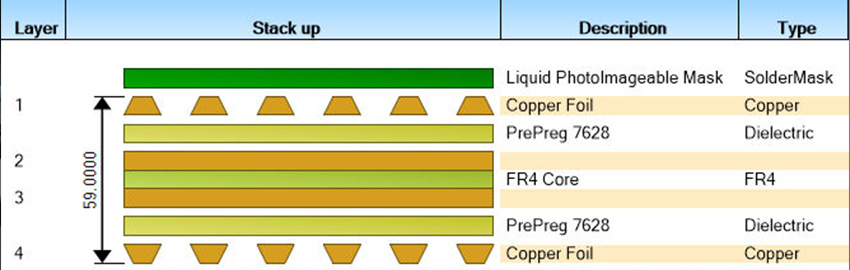
The Decode API provides automated analysis of PCB design and manufacturing data for integration into quoting, ERP and customer-facing workflows. Processes design packages to extract fabrication information, including stackups, board dimensions, drill data and DFM results from Gerber and ODB++ files, while also supporting BOM analysis, component sourcing, assembly planning and pricing. The API returns structured data covering PCB fabrication, assembly requirements and turnkey manufacturing estimates. Additional capabilities include integrated SpeedDFM analysis, version-controlled JSON schema support, BOM sourcing automation and assembly planning tools designed to streamline quoting and manufacturing workflows.
Read more: Boardera Launches Decode API for PCB Manufacturing Automation
The EI-1169 conductive ink is a UV-curable, polymer-free silver formulation designed for inkjet deposition in printed electronics, semiconductor packaging and additive manufacturing applications. Engineered for strong adhesion on copper, epoxy and polyimide substrates, the ink supports low-temperature processing and stable jetting performance across industry-standard printheads. The metal-organic decomposition (MOD) ink is lead-free and halogen-free and supports UV curing at 365nm and 395nm wavelengths. Combines long shelf stability, repeatable print performance and scalable processing for digitally manufactured electronics.
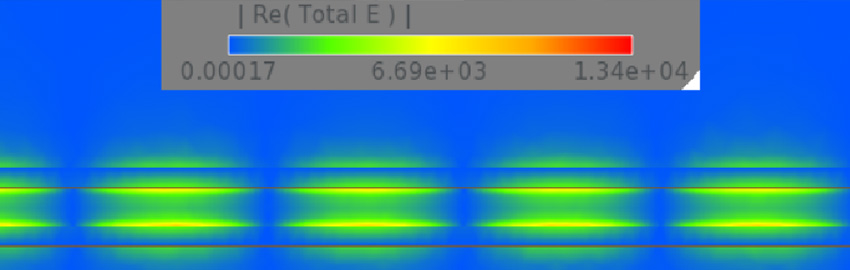
2.92mm solderless PCB connectors support high-frequency stripline and microstrip applications with performance to 40GHz. Available as vertical PCB jacks, the connectors use a threaded interface to eliminate solder joint variability and maintain consistent connector-to-PCB contact. The design supports impedance control across different PCB stackups while allowing installation, removal and reuse during prototyping and validation. Constructed with passivated stainless steel bodies, gold-plated beryllium copper contacts and ULTEM insulators, the connectors target microwave, millimeter-wave, test and measurement, aerospace, defense and advanced communications applications.
TNC Series thick-film NTC thermistors provide temperature sensing and monitoring for automotive, industrial, battery management and medical electronics applications. Available in 0402, 0603 and 0805 case sizes, the series offers resistance values from 50Ω to 500kΩ, B values from 2410K to 4700K, and operating temperatures up to 150°C. Devices use thick-film technology to improve mechanical strength, maintain consistent thickness across resistance values and enhance resistance to cracking compared with multilayer thermistors. Components feature strong solderability, fast thermal response, heat resistance and AEC-Q200 qualification for demanding environments.
Read more: Stackpole Electronics Introduces TNC Series Thick-Film NTC Thermistors
Signal analyzer portfolio supports wideband wireless, 5G NR, WLAN, radar and millimeter-wave design validation. Pro XA6 SA6320A provides up to 8GHz analysis bandwidth, frequency coverage to 67GHz, full preselection and GPU-accelerated 5G NR demodulation for high-frequency RF characterization. Expert XA5 SA6210A offers swept measurements to 32GHz, up to 2GHz analysis bandwidth and dual-channel RF analysis for MIMO, ultra-wideband and radar applications. Systems feature advanced error vector magnitude measurement capabilities, wide-resolution bandwidth support, dual-receiver architecture and compatibility with legacy X-Series SCPI command sets for streamlined RF test workflows.
Read more: Keysight Introduces Pro XA6 SA6320A and Expert XA5 SA6210A Signal Analyzers