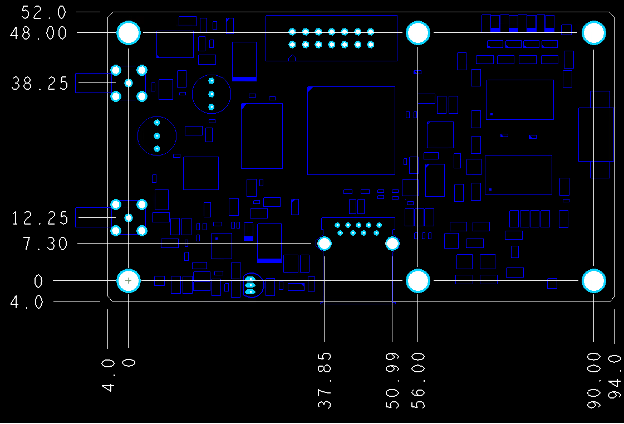
Signal integrity underpins reliable electronic design, and emerging AI tools are reshaping how engineers optimize it across all system speeds.
Ever wonder what makes our modern electronic devices so incredibly reliable, whether they’re processing gigabits of data or simply ensuring a sensor reads accurately? While many factors contribute, one unsung hero often working behind the scenes is signal integrity (SI). Think of it as the invisible guardian of your electrical signals, ensuring they travel cleanly and efficiently from point A to point B. Ignoring it can lead to headaches, delays and even product failures, regardless of your operating speed. But embracing it? That’s where the magic happens.
In today’s electronic systems, from the fastest data centers to the most sensitive medical devices, a deep understanding of how signals propagate and how to mitigate issues that degrade signal quality has become critical. It’s not just about “high-speed” anymore; it’s about any signal path where clean, reliable transmission is paramount. Let’s dive into why understanding and prioritizing signal integrity is crucial for every designer across all design spectrums.
Getting SI Right from the Start
Imagine building a skyscraper without a proper blueprint or a solid foundation. It wouldn’t stand a chance, right? The same applies to your electronic designs. The very first steps you take in your PCB layout can make or break your signal integrity.
At its core, signal propagation, even at seemingly lower frequencies, involves transmission lines. These aren’t just simple wires; they are sophisticated structures that guide electromagnetic energy, modeled by per-unit-length inductance (L), capacitance (C), resistance (R), and conductance (G). While their effects become more pronounced at higher frequencies, any trace whose length is a significant fraction of the signal’s rise-time wavelength behaves as a transmission line. Their characteristic impedance is a crucial parameter, determined by the trace geometry and the PCB material properties.
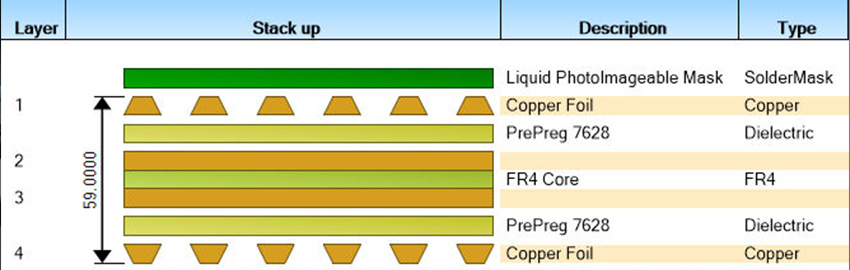
Don’t make fundamental mistakes (routing, parts placement, stackup). This is where we lay the groundwork. Simple errors in how you route traces, place components or design your PCB stackup can introduce noise, reflections and crosstalk that degrade signal quality. This isn’t just for fast signals; even a slow digital signal can suffer from ringing, or a sensitive analog signal can pick up unwanted noise. It’s much easier (and cheaper!) to correct these issues during the design phase than after prototypes are built.
Component placement dictates board performance. Where you put your components isn’t just about fitting everything on the board. Strategic placement minimizes trace lengths, reduces parasitic effects and optimizes signal paths, directly impacting your board’s overall performance by managing impedance and reducing potential discontinuities. This is vital for minimizing noise pickup in analog circuits and ensuring reliable switching in digital ones.
Route signals adjacent to their reference planes. This is a golden rule for all designs. Keeping signals close to their ground or power planes provides a clear, low-inductance return path for the current, minimizing loop inductance and significantly reducing electromagnetic interference (EMI) – both radiated and susceptibility. This helps maintain a consistent characteristic impedance for your transmission lines and reduces noise.
Tightly coupled power and ground planes. A well-designed power delivery network (PDN) with tightly coupled power and ground planes acts like a stable reservoir for your components, providing low impedance and filtering out noise. This keeps components powered reliably and prevents power rail noise from coupling into signals, which can be detrimental to both digital and analog performance.
Understanding the Challenges: Impedance, Reflections and Crosstalk
Even with a great foundation, signals face inherent challenges that can compromise their integrity, regardless of their speed.
Impedance discontinuities and reflections. When a signal encounters a sudden change in its electrical environment – a change in characteristic impedance – a portion of its energy doesn’t continue forward. Instead, it reflects toward the source. This phenomenon is quantified by the reflection coefficient (which depends on the impedance before (Z₁) and after (Z₂) the discontinuity. These reflections cause signal degradation like overshoot, undershoot and ringing. While more severe at higher speeds, ringing can still lead to false triggering in slower digital circuits or introduce significant errors in sensitive analog measurements.
Termination techniques. To minimize these detrimental reflections, various strategies are employed:
- Series termination: A resistor placed at the source end, matching the combined driver and resistor impedance to the line’s characteristic impedance. This absorbs reflections at the source.
- Parallel termination: A resistor (or network) at the receiving end, absorbing the signal energy to prevent reflections from bouncing back. This includes variations like DC, AC and Thevenin termination, each suited for different power and signal characteristics.
- Multi-load scenarios: These require careful layout and often utilize parallel termination at the bus end with very short stubs to each load to minimize reflections.
Crosstalk. This is the unwanted coupling of energy between adjacent signal traces, primarily due to capacitive and inductive coupling. It manifests as near-end crosstalk (NEXT), which is coupled noise measured at the aggressor’s source end, and far-end crosstalk (FEXT), measured at the aggressor’s load end. Crosstalk isn’t just a high-speed problem; it can introduce noise into sensitive analog signals or cause logic errors in digital circuits if the coupled noise is large enough to cross logic thresholds. Mitigation involves increasing spacing between traces, decreasing coupling length, using ground planes as shields, and optimizing trace geometry.
Low-Hanging Fruit and Advanced Analysis
Sometimes, we’re tempted to push through a design, hoping for the best. But when it comes to SI, a little analysis goes a long way and can save a lot of grief down the line, no matter the application.
You don’t have to be an SI guru to benefit from good practices. Partnering with dedicated signal integrity and power integrity (SI/PI) engineers is invaluable. They bring specialized knowledge and tools, helping identify potential issues early and guide you toward robust solutions for any design.
Many SI issues are low-hanging fruit that can be resolved with basic checks and adherence to best practices. Addressing these early frees SI/PI engineers to tackle the truly complex challenges and help set overarching standards and limits for your designs. It’s a win-win for everyone.
To effectively address these challenges, both simple and complex, advanced analysis tools are essential for validating and diagnosing SI issues:
Software. Modern electronic design automation (EDA) simulation and analysis tools are indispensable for pre-layout and post-layout simulation and analysis. They allow engineers to predict signal behavior and identify potential problems before fabrication, whether it’s a high-speed bus or a low-frequency, noise-sensitive sensor line.
Hardware. For real-world validation and debugging:
- High-performance oscilloscopes: Used for time-domain measurements, allowing engineers to visualize signal waveforms, measure rise/fall times (edge rates) and generate eye diagrams – a powerful visual representation of signal quality, jitter and noise margins, particularly useful for digital signals of all speeds.
- Vector network analyzers (VNAs): Crucial for frequency-domain analysis, providing S-parameters (scattering parameters) that offer a “health report” of how signals perform at different frequencies. This reveals losses, resonances and impedance variations that can severely impact data, from RF to high-speed digital.
- Time domain reflectometry (TDR): A powerful technique that sends a fast edge down a transmission line and analyzes the reflections to precisely locate and identify impedance discontinuities along the trace. It’s like an x-ray for PCB traces, invaluable for debugging any signal path.
AI as an Enabler
The future of design is here, and artificial intelligence (AI) is rapidly becoming a powerful ally in the world of signal integrity. AI isn’t just about doing more with less; it’s about doing things smarter, faster, and more accessible across all design types.
AI opens up the possibility to do more with less, enabling mentorship and training to be taken further, faster and more easily.
Imagine a new user interface (UI) that leverages AI to guide PCB designers through general SI analyses with ease. This could mean automated checks for common pitfalls, suggestions aligned with industry best practices, or flagging potential issues before they become major problems. It empowers designers to tackle the “low-hanging fruit” effectively, ensuring a solid foundation without needing deep SI expertise, whether they’re designing a simple microcontroller board or a complex server.
For those who want to deepen their understanding or are working with limited resources, AI unveils incredible new options. Through design space exploration (DSE), AI can rapidly evaluate numerous design variations to optimize performance, cost, and manufacturability. This allows PCB designers to explore complex tradeoffs, uncover innovative solutions and achieve optimal signal integrity, even in the most-challenging scenarios. It’s like having a highly intelligent assistant that can recommend an optimized topology using simulation in the blink of an eye, regardless of design complexity.
Conclusion
I’ll end with this: signal integrity is not just a buzzword for high-speed systems; it is a fundamental pillar of PCB performance for any electronic design. Mastering these concepts, from understanding transmission lines and mitigating reflections to leveraging advanced simulation and measurement tools, is crucial for creating robust and reliable systems as technology continues to push boundaries in speed, edge rates, complexity and sensitivity. Let’s build our electronic future on a solid foundation of excellent signal integrity, no matter the application.
Stephen V. Chavez is a senior printed circuit engineer with three decades’ experience. In his current role as a senior product marketing manager with Siemens EDA, his focus is on developing methodologies that assist customers in adopting a strategy for resilience. He is an IPC Certified Master Instructor Trainer (MIT) for PCB design, IPC CID+, and a Certified Printed Circuit Designer (CPCD). He is chairman of the Printed Circuit Engineering Association (PCEA); This email address is being protected from spambots. You need JavaScript enabled to view it..