Knowing which PCB specification changes require new tooling and which do not can help designers and buyers reduce nonrecurring engineering costs while avoiding unnecessary delays.
NRE (nonrecurring engineering) is a one-time fee charged by the fabricator for each revision of a design for a particular printed circuit board.
This fee covers the CAM engineering time, checking for design errors and providing a report for those items that need to be addressed. It also includes designing a sub-array panel that will work well for the assembler, generating photographic films or programming the LDI (laser direct imaging) machines, writing CNC drill and optimized routing programs and providing stackup details and material specifications.
There is often a separate fee for electrical test, test connectivity (including top-side pad connections to bottom-side pads), and programming the flying probe tester, or creating the electrical test (e-test) fixture, often dependent on quantity to be built.
Buyers often ask me: “We need to make a change to this PCB design. Are we going to get hit with another NRE charge?”
The answer depends on what changed and how well the changes are documented. To the PCB fabricator, reusing existing tooling from a previous vendor’s NRE is somewhat limited. The “design” is the physical layout dictated by the details of the fabrication drawing, including stackup and impedance requirements, referenced specifications, electronic CAD files and NC drill files.
The golden rule of NRE and electrical test is this: If the changes impact connectivity and require the CAM engineer to generate new films, a new drill tape, a new routing path and a new e-test program, both the NRE charge and electrical test charges apply.
If the design engineer moves a single via or changes the board's outline/stackup, that is a hard design change. The fabricator, if not using LDI, may have to discard the old phototooling and start from scratch, so some NRE and electrical test charges will apply. A PCB design also includes fabrication specifications and fab drawing notes, however. Several significant changes can be made to a PCB's specifications that alter the final product without triggering a new NRE or tooling charge.

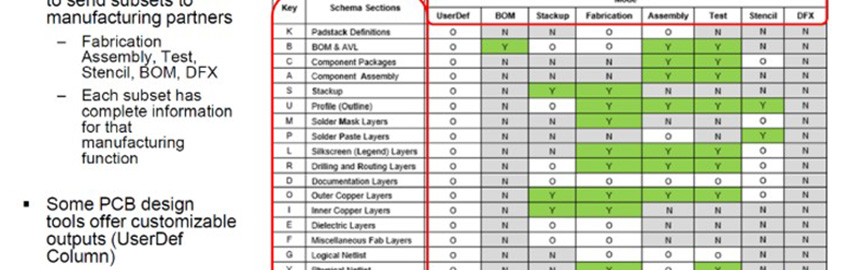
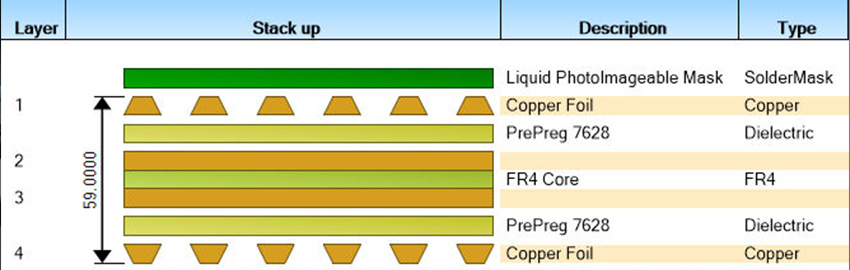
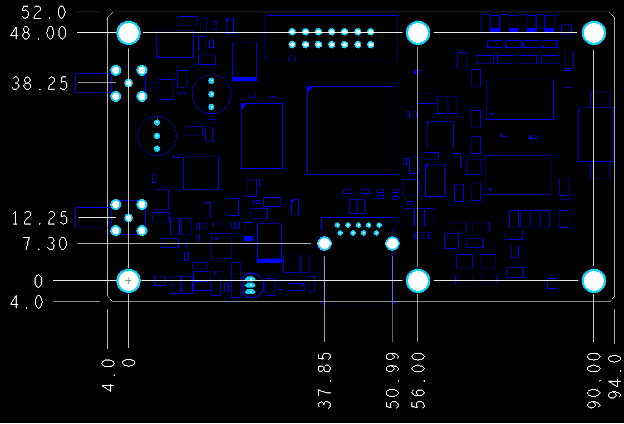
Figure 1. Changes that affect PCB layout, drilling, routing or connectivity typically require new NRE and electrical test programming, while specification changes such as solder mask color, surface finish or laminate material often can be made without new tooling charges.
Here are the changes you can make safely:
Solder mask and silkscreen colors. Changing a board from green solder mask with white silkscreen to matte black solder mask with yellow silkscreen typically will not incur an NRE charge. The physical layout – where the solder mask is applied and where the legend is printed – remains unchanged. The fabricator simply uses a different solder mask color or routes the panels through a different coating process. The unit cost may increase slightly for nonstandard colors because the application process differs, but the tooling remains the same. In some cases, however, tighter solder mask clearances achievable with green solder mask may not be possible with black solder mask.
Surface finish. If a board is originally designed with HASL (hot air solder leveling) and the assembler requires ENIG (electroless nickel immersion gold) to accommodate fine-pitch SMT components, the surface finish can typically be changed without incurring an NRE charge. The copper pads remain in the same locations; the fabricator simply routes the bare copper panel through the ENIG process instead of applying HASL. While the unit price may increase, the tooling does not change.
Base laminate material (Tg rating). Upgrading the FR-4 material is a common requirement. A design may originally specify standard Tg130 FR-4, only to later determine the board will operate in a high-temperature environment requiring Tg170 or Tg180 material. Because the change simply requires the fabricator to use a different laminate during board fabrication, the electronic design data remains unchanged and significant NRE charges may not apply. The material upgrade may increase the cost of the order, extend lead times if the laminate is not readily available and require updated impedance calculations that affect trace widths and spacing.
Overall board thickness. Changing the overall thickness of standard FR-4 (for example, from 1.6mm/0.062" to 2.4mm/0.093") generally does not incur an NRE charge, provided the layer count remains the same and the aspect ratio of the smallest drilled holes stays within the fabricator's capabilities. The CNC drill coordinates remain identical; the drill bit simply travels slightly deeper. If the increased thickness affects impedance calculations, however, additional engineering charges may apply.
Moving copper traces, pad or ground plane modification. As long as a plated through hole is not being repositioned, moving a copper trace that is too close to an edge, shaving or increasing a pad size or modifying the fill of a ground plane usually avoids NRE, especially when LDI is in use where there are no physical films involved.
Adding standard manufacturer markings. If a UL logo, date code or flammability rating is omitted from the original silkscreen layer, the fabricator can typically add it through the fabrication notes. The CAM department applies its standard, preapproved UL markings to the silkscreen layer automatically. Because this is a standard administrative addition rather than a custom layout change, most offshore fabricators will waive any NRE charge.
The Bottom Line
Designers and buyers need to communicate in advance with their board fabricators what changes are needed to a particular board and the impact they may have on the present tooling package.
Even if the change is simple, time and effort are needed for documentation. Revision changes must be recorded on both the drawing and the silkscreen of the board itself to prevent a “down-rev” from being built and/or assembled by mistake, and that documentation incurs some cost for the fabricator.
Greg Papandrew has more than 25 years’ experience selling PCBs directly for various fabricators and as the founder of a leading distributor. He is cofounder of DirectPCB (directpcb.com); This email address is being protected from spambots. You need JavaScript enabled to view it..