Somewhere between the badge scanner beep and missing business cards, community happens.
I’ve been reading to my son before bed lately. And now that we’ve (mercifully) graduated from the picture book phase, I did what any overexcited parent with a bookshelf full of “classics” would do: I went straight for the big ones. Peter Pan. Alice in Wonderland. The Secret Garden.
I quickly realized, somewhere around my third dramatic reading of a particularly dense sentence, that perhaps I was a little too eager. I was narrating stories with words he wasn’t quite ready for yet, piling on adventures that made more sense to me than to him.
Effective design means building with manufacturing limits in mind.
Everyone makes mistakes. In PCB design, design for manufacturing (DfM) is all about correcting mistakes after reviewing a PCB layout. We then devise corrective actions to fix those mistakes and improve procedures to make products error-free.
The term “PCB manufacturing” includes fabrication and assembly. Reliable and smooth PCB manufacturing requires DfM-compatible design practices. The journey begins with the schematic, followed by layout, which serves as the blueprint for the design. PCB design is a unique field where success depends on the designer’s understanding of fabrication and assembly technologies. We are no longer living in an era of simple designs that are easily manufactured.
And practical steps to exorcise the chemistry gremlins.
October brings ghosts, goblins and, if you’re not careful, a few monsters lurking right inside your plating tanks. They won’t knock on your door or ring a bell, but they will hide in your agitation systems, anodes and cables. If ignored, they can turn good product into scrap before you even notice.
Here are five things that tend to haunt plating tanks, and how to exorcise them before they ruin your yield.
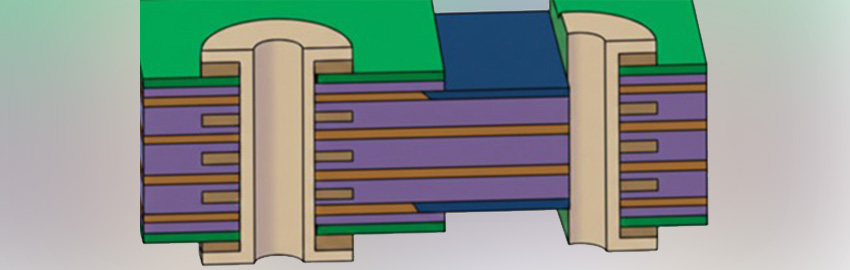
Avoiding via failures caused by barrel plating separation.
PCB manufacturers face challenges in the precise registration of multiple layers, which is required to ensure reliable interconnects, and in integrating new technologies that enhance performance. We continuously optimize and simplify processes to improve efficiency, yield and maintain product quality. Balancing these factors is crucial for producing high-density, high-performance PCBs that meet the specific needs of various applications.
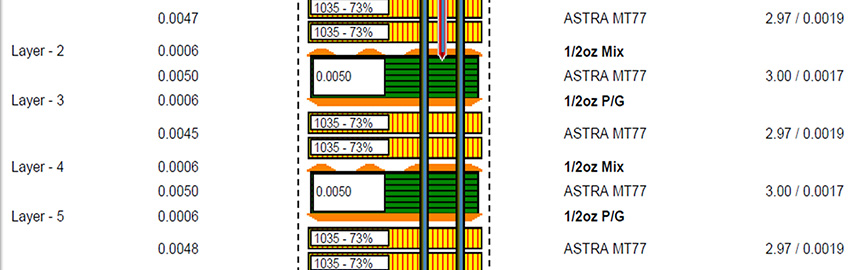
Here, we review and explain problems associated with conventional copper wrap plating requirements specified in IPC-6012B, and explore the advantages of the newly developed “Innovative Wrap” technology.
Boards aren’t the only things getting more complex. Workloads are too.
PCB designers are, by and large, a veteran crew. Many have been in the game for decades, steadily turning out increasingly complex boards while titles and org charts shift around them.
Likewise, the annual PCD&F Salary Survey shows a stable but strained picture. Respins haven’t surged, which speaks well for quality, but workloads are climbing and professional development support hasn’t kept pace. Designers say they can keep projects on track, but they’d like better resourcing and clearer priorities before the pressure ratchets higher.
Financially, the story is steady if not perfect. Salaries continue to climb and bonuses are common, but benefits have stagnated or dropped for a third of respondents. And although job satisfaction trends positive, nearly half see themselves stepping away from the role within the next five years – a reminder that retention and succession planning will soon be just as important as design rules.
Component Dynamics is showing how independent distributors can guide their customers in tricky times.
It’s well-established that the Covid component crisis forced the electronics manufacturers to rethink how they managed their supply chains.
The lesser-told story, however, is how it also reoriented distributors, pushing them to reposition their linecards and services to adapt to the changing market.
Those lessons were not lost on Component Dynamics, an independent supplier focused on supplying high-quality electronic component solutions for obsolete and hard-to-find parts. But while the company might scour the globe on behalf of a customer in need of a handful of tantalum capacitors, it also provides valuable market intel, boosting those firms’ predictive capabilities.