| New IPC Standard is the Ticket to Next-Gen PCB Designs |
|
|
| Written by Mike Buetow | |||||||
| Tuesday, 05 February 2013 00:32 | |||||||
Page 1 of 2
After going several years between updates, IPC has released IPC-2221B, the industry standard for designing printed circuit boards. PCD&F editor in chief Mike Buetow spoke in January with Task Group chairman Gary Ferrari about the critical changes to the spec. [Disclosure: Buetow worked as an IPC staff member under Ferrari on the original IPC-2221.]
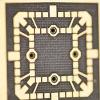
MB: It’s been a long road since the IPC-2221A was released. What’s new, and what’s changed? We realized that there was no point for [the IPC-2221 task group] to try to re-describe all these finishes; that’s what the IPC Surface Finishes Task Group is better suited to do. So we went to [Surface Finishes Task Group chairmen] George Milad and Gerard O’Brien and asked for descriptive summaries for each of the most popular surface finishes. Information such as typical thicknesses, what applications they are good, and not good for, and shelf life, to name a few. Then we conducted a big research project on the press-fit connectors. That one was tough. Phil Henault of Raytheon was in charge of that effort. He did a lot of research. At the end of the day, he had all this data. Each connector had its own hole size; you couldn’t really come up with a recommendation that was common to all. We finally came up with a tutorial about press-fit pins and what to look for, but could not come up with a table for recommended hole sizes because it was all over the map. We expanded the sections on thermal management and metal core designs. This wasn’t really influenced by LEDs; 80% to 90% of the task group members come from the aerospace sector. We tried to glean information from wherever we could. The biggest controversy was the development of a new quality conformance coupon set. We spun off a task group, chaired by Tim Estes of CAT to look at the coupons. In the past, we would develop all the coupons, and the IPC-6012 Task Group would pick them up and apply the appropriate testing, but the IPC-2221 had to invoke them and show the design in the design standard. This time, we spun it into an Appendix, which can be updated on a regular basis instead of waiting for a major revision. The instructions we gave Tim were simple: Look at the coupons and find out whether people were using them. If not, why not? And if they don’t apply anymore, get them out of the standard. As an example, the registration coupon came from IBM years ago to measure annual ring and measure breakout using an x-ray. With all the copper planes, you couldn’t see anything. We scuttled that, and developed a new registration coupon that is mathematically developed. We modified or added new coupons – there are nine new coupon designs now. This was a really big one. What we were afraid of is that, when a coupon says you need to take the worst-case land size and worst-case component, there’s no guarantee the board shop will use the right one. There’s no advice about which blind and buried vias to use, and today’s designs are usually so dense, the plating of holes is affected by the hole density in an area. So we now have a coupon that reflects the density we see today. The concern we had was, we wanted to develop a software package that could be distributed to the fabricators that would automatically extract from the native CAD files what data was needed to create the coupons. There would be no human intervention. We should have a software validator for the extraction program and generator. You can’t just go with Gerber; it needs to be the IPC-2581 [the data transfer standard]. That’s the primary route we’re going to go with.” [continues on next page]
|
|||||||
| Last Updated on Tuesday, 05 February 2013 14:48 |
Design News
- IPC, PCB Libraries Team on Library Tools for Design Standard
- Mentor, Tezzaron Optimize Calibre 3DSTACK for 3D-ICs
- FabStream, ADI Offer Digi-Key Parts Library
- DRAM Market Getting Tight
- Ansys Sets Q1 Revenue Mark
- EI SiP Meets Missile Interceptor Challenge
- Sweden to Host SI Workshops
- Altium Signs Fisher/Unitech as Midwest US VAR
- NI's Revenue Jump Can't Save Profits
- 2013 PCD&F NPI Design Awards Open
Market News
- Phones, TVs Boost Printed and Flexible Electronics Sales
- Medical Electronics Market to Double, Offering Ample Opps for EMS
- IT Market Being Pulled Down by PC Sluggishness
- Tablet Sales Surged in Q1
- Smartphone Shipments Up 38% in Q1
- IPC: March PCB Orders Down 2.3%
- Solid Forecast for Enterprise Network Equipment Spending
- IC, Packaging Sales to Grow through 2017
- Driver-Assist Systems Market Going Fast on Own
- Study Says US on Track to Compete with China on Cost
Fab News
- Camtek’s Q1 Revenue Nearly Flat at $18.1M
- Enthone Parent Sees Pickup in PCB Demand
- SMTA, IPC to Co-locate Fall Events
- LPKF Posts Q1 Revenue Up 60%
- Despite Sequester, Aurora Circuits Reports Q1 Sales Up 12%
- Rogers Restructuring to Cut Annual Spending by $12M
- DoD to Propose Changes to Counterfeit Electronics Procurement Practices
- Cambridge Nanotherm to Build 1st Manufacturing Plant
- Ex Jisso Members Re-Form Under CAMEST Banner
- April Not Cruelest Month for Park
Products
Sherlock 3.0 automated design analysis software is for analyzing, grading and certifying the expected reliability of products at the circuit card assembly level. Includes a global parts database with private cloud storage; 3D FEA model and 3D viewer...
Features
A series of workshops next month on compliance with RoHS and other directives will help US companies looking to break into the European market.