| iPad 2 BoM Costs Static, Teardown Reveals |
|
|
| Written by Mike Buetow | |||
| Monday, 19 March 2012 13:48 | |||
|
EL SEGUNDO, CA -- With the second-generation iPad, Apple has held the line on the bill of materials, maintaining virtually the same costs as the first version of the device, an IHS iSuppli teardown analysis of the product has revealed. The 32GB NAND flash memory version of the iPad 2 equipped the with Global System for Mobile Communications/high-speed packet access (GSM/HSPA) air standard carries a BOM of $326.60. The 32GB version equipped with the code division multiple access (CDMA) air standard carries a BOM of $323.25. This compares with $320 for the first-generation 32GB 3G iPad, based on pricing from April 2010.
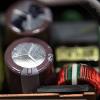
When manufacturing costs are added, the cost to produce the GSM/HSPA version rises to $336.60, and the CDMA version goes to $333.25. The attached table presents the IHS iSuppli preliminary BOM and manufacturing cost estimates for the two versions of the iPad 2 torn down by IHS iSuppli. The component and vendor selection in the second-generation iPad 2 closely conforms with that of the original iPad. “Despite the obvious changes to iPad like the enclosure and the battery, and the less obvious changes in the touch screen, the iPad 2’s components and design are remarkably similar if not the same as those of the iPad 1,” said iSuppli analyst Andrew Rassweiler. “The iPad 1 and iPad 2 use the same components and suppliers for the NAND flash, the multi-touch controllers and touch screen drivers, as well as the same core chip in the wireless section as was found in the iPhone 4. Many of the other components—including the apps processor and the Bluetooth/frequency/global positioning system/wireless local area network chips—have the same suppliers and are essentially new revisions of the chips found in the previous iPad and other iPhones.” The touchscreen in the iPad 2 has been modified and updated in the iPad 2, but the LG Display appears to be the same, and cost estimates for the touchscreen are markedly higher. The display and touch screen subsystem in the iPad 2 costs $127, compared to iSuppli's initial $95 estimates for the iPad 1, based on pricing from April 2010. The difference is due almost entirely to the cost of the touchscreen. The reason for the increase comes in large part from manufacturing challenges that touchscreen manufacturers have experienced since beginning production. Production yields, though they have been improving, has been very low throughout 2010, and drove prices to be much higher than initially expected. Furthermore, refinements in the touchscreen specifications have driven the price point even higher for the iPad 2. Contributing factors to that cost increases include more expensive glue to improve the efficiency/performance in the bonding, thinner Gorilla cover glass and more detailed inspection process requiring additional equipment for optical and panel examination. For the GSM/HSPA iPad 2, Apple is sticking with the same wireless baseband/radio frequency/power amplifier solution from Infineon—now owned by Intel—as is used in the iPhone 4 (GSM/HSPA version). Because of the use of a Qualcomm solution used in the recent iPhone 4 CDMA, iSuppli had initially speculated that Apple might consolidate suppliers for wireless chips and use a Qualcomm solution in the iPad 2 GSM/HSPA version. Instead the iPad 2 uses the same Intel chipset used in the iPhone 4 GSM/HSPA version. For the CDMA version of the iPad 2, it is assumed the chips and components from the CDMA version of the iPad 2 are those used in the iPhone 4 CDMA, and iSuppli took the wireless component list directly from its iPhone 4 CDMA teardown analysis. The A5 processor in iPad 2 costs 75% more the A4 processor in the iPad 1, based on improvements in performance and inherent design changes. The A5 processor, whether produced by Samsung or another foundry, is based on Apple’s own designs. Apple owns the intellectual property, and as such, whoever builds the A5 processor for it is doing so as more of a foundry service—like a contract manufacturer—which gives Apple a huge competitive cost edge on the piece price of these processors. At $14, the A5 processor costs 75% more than the current A4 processor. The cost of this processor is expected to erode quickly over the course of the next year as Apple ramps production. The iPad 2 employs an improved and more expensive battery compared to the iPad 1. The iPad 2 battery carries a cost of $25, compared to $21 for the iPad 1. The iPad 2’s battery is much thinner than the iPad 1’s and uses three cells, rather than two. Apple never takes a standard approach with batteries and challenges its vendors to create unique solutions to accommodate their desired form factor. Although other manufacturers are using similar flat pack batteries, these incredibly thin batteries, and special battery management circuitry just for Apple batteries, provide an exceptional result. Power management circuitry also plays a big role in the iPad 2, as well as in iPhones and iPods, and represent a major part of how Apple is able to maximize battery lifetime while minimizing size and weight. Apple iPad 2 Teardown Photo Analysis IHS iSuppli Apple iPad 2 Teardown BOM Estimate
|
Design News
- Pakistan Hopes New Design Centers Will Aid Push into PCB Market
- PCB West Registration Open
- PCB West Technical Conference Announced
- iNEMI Seeks Participation on Implantable Device Project
- IPC-2581 Standard to be Circulated for Final Vote
- Vast Majority of Parts Placed are SMT, IPC Survey Finds
- Ansys Software Pirate Gets 12 Years
- DoD Seeks Public Input on Contract Obligations Concerning Fake Parts
- iNEMI Releases Counterfeit Parts Assessment
- Plexus Opens 2d Scotland Site
Market News
- Semi Fab Equipment Orders Up Sequentially
- Slow Growth Ahead for Electronics Industry, IPC Says
- US Mfg Orders Slide in April
- April Semi Sales Lag, Moderate Growth Ahead
- Semi Fab Expectations High for US
- Semi Fab Equipment Outlook Improving
- Q1 DRAM Revenue Rises 6% Sequentially
- IDC Downgrades PC Outlook
- Server Shipments Slow in Q1
- IDC Forecasts Tablet Shipments to Grow 58.7% in 2013
Fab News
- LG Innotek to Divest PCB Unit
- BOMcheck Reachs 1M RoHS and REACH Materials Declarations
- Lazer-Tech Acquires Sales Firm
- AT&S to Push into IC Substrate Market
- Partner Suggests More Acquisitions Ahead for Advanced Circuits
- Plasma Technology Workshop Set for Ontario
- Bare Board Market Forecast for 8% CAGR Through 2017
- GBM Expects Auto Sales to Drive New Growth
- New Fine-Line Etching Process Said to Eliminate H2O2
- RoHS2 Webcast Offered this Month
Products
ML605GTW4-UV NC laser drill features two high-energy UV laser oscillator heads. Uses 355nm wavelength suitable for drilling polyimide material/flexible substrates. Mitsubishi Electric, www.mitsubishielectric.co.jp
Features
The world’s largest electronics show for Electronics Packaging, Circuits and Assembling (the JPCA Show) was held at Tokyo Big Sight from June 5 through June 7. The following shows were held concurrently in the convention center: Large Electronics Show 2013, JIEP 2013 (Microelectronics Show), Jisso Protech 2013 and Monotsukuri Fiesta 2013. The electronics industry in Japan is suffering its worst slump in history. I was hoping to see some...
- Achieving Proper Placement of Passive Devices Used for Enet Signal Termination
- Hall of Inventors
- Using Forensics to Improve PCB Design and Assembly
- CAD Pioneers Lead Latest Hall Inductees
- Electrical Performance in a Thin Package
- Making PCB Design a Team Approach
- IPC-2581 Consortium Update
- ESD Standards: An Annual Progress Report
- Reinventing Japan
- The Manufacturing Spin